

Energy and Emissions
As a company that develops environmentally responsible technologies, we understand our role in reducing our environmental impact.
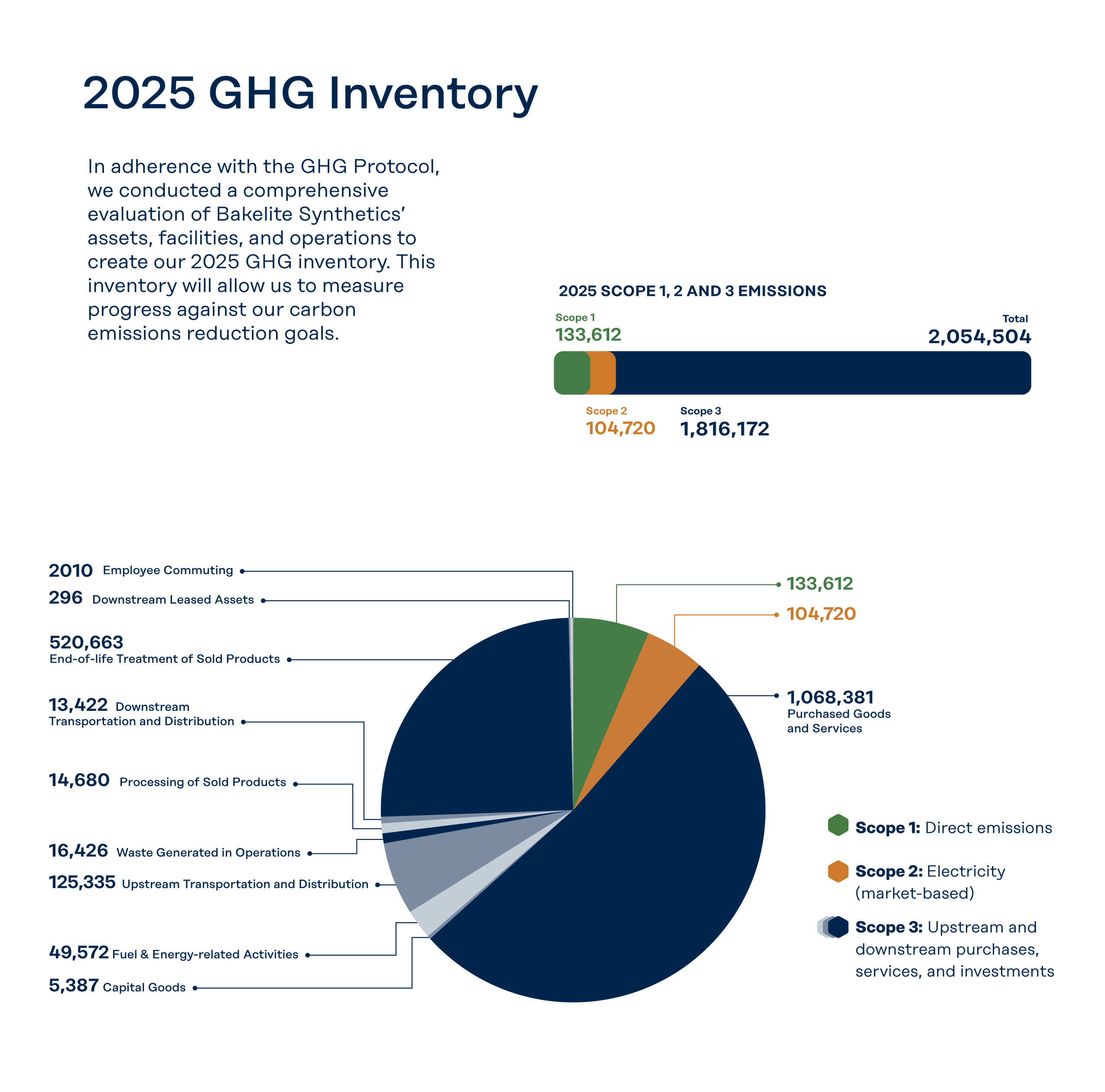
To accomplish this, we have integrated sustainability into our business strategy, operations, and risk management. We have implemented initiatives to harness renewable energy, including identifying opportunities to reduce the total energy we consume through site-level energy assessments and sharing best practices. We will continue to track our share of greenhouse gas (GHG) emissions through GHG inventories.
Bakelite has been recognized as a partner in the U.S. Environmental Protection Agency (EPA) ENERGY STAR program. As a result, we have pledged to rigorously monitor energy performance and implement energy management strategies based on ENERGY STAR guidelines.
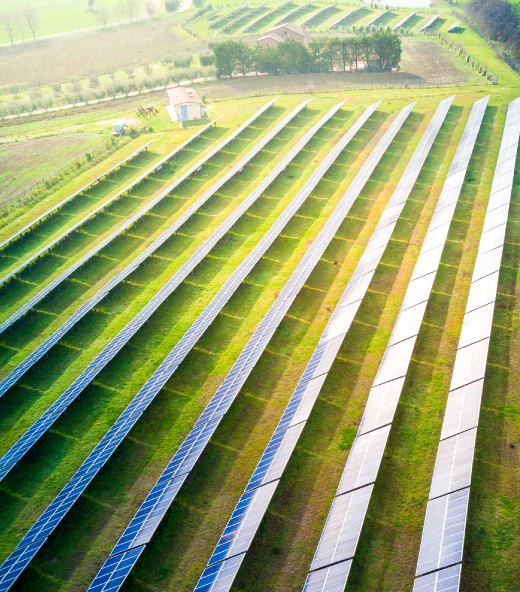
Two on-site solar-panel farm installations at Barry, UK and Lantaron, Spain, and a power purchase agreement in Kitee, Finland. These projects supply up to 20% of each site’s electricity, with a corresponding reduction in Scope 2 carbon emissions.
In Botlek, The Netherlands the first full year of steam-turbine operation transformed process-generated steam into electricity that now supplies up to 50% of the site’s total energy needs.
Double Materiality: An Assessment of Risk and Opportunity
Bakelite performed its first Double Materiality Assessment (DMA) during 2025, enhancing our understanding of sustainability topics significant to our organization and our impact on society and the environment. Material topic categories included climate change and pollution, workforce topics, end user safety, and business conduct. Workshops, data analysis, and stakeholder engagement identified climate action, safety, innovation, and data security as top priorities in these categories. The double materiality approach ensures that our sustainability strategy remains aligned with global expectations and supports transparent reporting.
By evaluating impacts and financial risks together, we make responsible business decisions that support resilient growth and long-term value creation. This approach elevates sustainability beyond reporting, guiding where we invest, innovate, and take action to deliver meaningful real-world outcomes. The DMA helps us anticipate emerging risks and opportunities, enabling sustainability to become fully integrated into core business planning and strengthening our organization’s ability to adapt and thrive in the future. Bakelite’s investments in renewable energy through on-site solar farms and our acquisition of Sestec to enhance our bio-based product portfolio are just two key areas where we address risks and opportunities for a more sustainable future.
Climate Risk Assessment
Building on the DMA foundation, we conducted a Climate Risk Assessment (CRA), aligned to the Task Force on Climate-Related Financial Disclosures (TCFD). This deeper dive into climate risks provided a detailed understanding of how evolving climate conditions may influence our operations, value chain, and long-term business resilience. As a global supplier of thermoset resins and engineered materials, we recognize that climate-related risks, both physical and regulatory, are increasingly shaping customer expectations, market dynamics, and the broader manufacturing landscape.
The CRA analyzed a range of potential climate futures to provide scenarios of business vulnerabilities and opportunities across short-, medium-, and long-term horizons. Key risks include extreme weather-related business disruptions, technology transition, and growing attention to lower-impact materials. At the same time, significant opportunities exist in lower-carbon product innovation, operational efficiency improvements, renewable energy deployment, and circular material solutions.
The findings reinforce our strategic focus on sustainability, product innovation, and operational resilience. Bakelite
remains committed to transparently managing climate-related risks while partnering with our customers to deliver reliable, lower-impact solutions.
