
 Bakelite resins play an essential role in manufacturing High Pressure Laminates (HPL), which manufacturers use to make kitchen counters, flooring, cabinets, tabletops, and more.
History of HPL
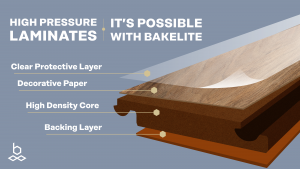
HPLs first appeared over 100 years ago as electrical insulation. Soon, homeowners and designers began using them in mid-century kitchens. The core of every HPL product includes layers of phenolic resin and saturated kraft paper. A decorative paper saturated with clear melamine resin forms the top layer, allowing the color of the paper to become part of the final HPL product.
Today, Bakelite supplies phenolic and melamine resins for HPL production. Bakelite sites in North America and Europe manufacture these resins.
How it Works
To make High Pressure Laminates, kraft paper is treated in a saturator that covers both sides with phenolic resin. The paper is dried in a warm oven, where the resin becomes “b-staged.” It’s not cured yet, but the resin fully incorporates into the paper. Manufacturers use the same process for melamine resin but apply it to unique patterned paper. They stack layers of phenolic kraft paper with a top layer of decorative melamine paper and add a special die that imprints texture onto the melamine surface. The final thickness of composed sheets ranges from 1/10” to over 1” thick.
The Bakelite Difference
Modern High Pressure Laminates products are more advanced than those from the 1940s and 50s. Today’s resins:
- Resist warping and blistering from heat exposure
- Allow for straight or curved edges
- Created with unique textures, patterns, and shapes
Just one of our resin customers makes more than 20,000 unique products.
Next time you visit a home store, watch a home design show, or start a home renovation, remember Bakelite’s role in creating these end use products.